
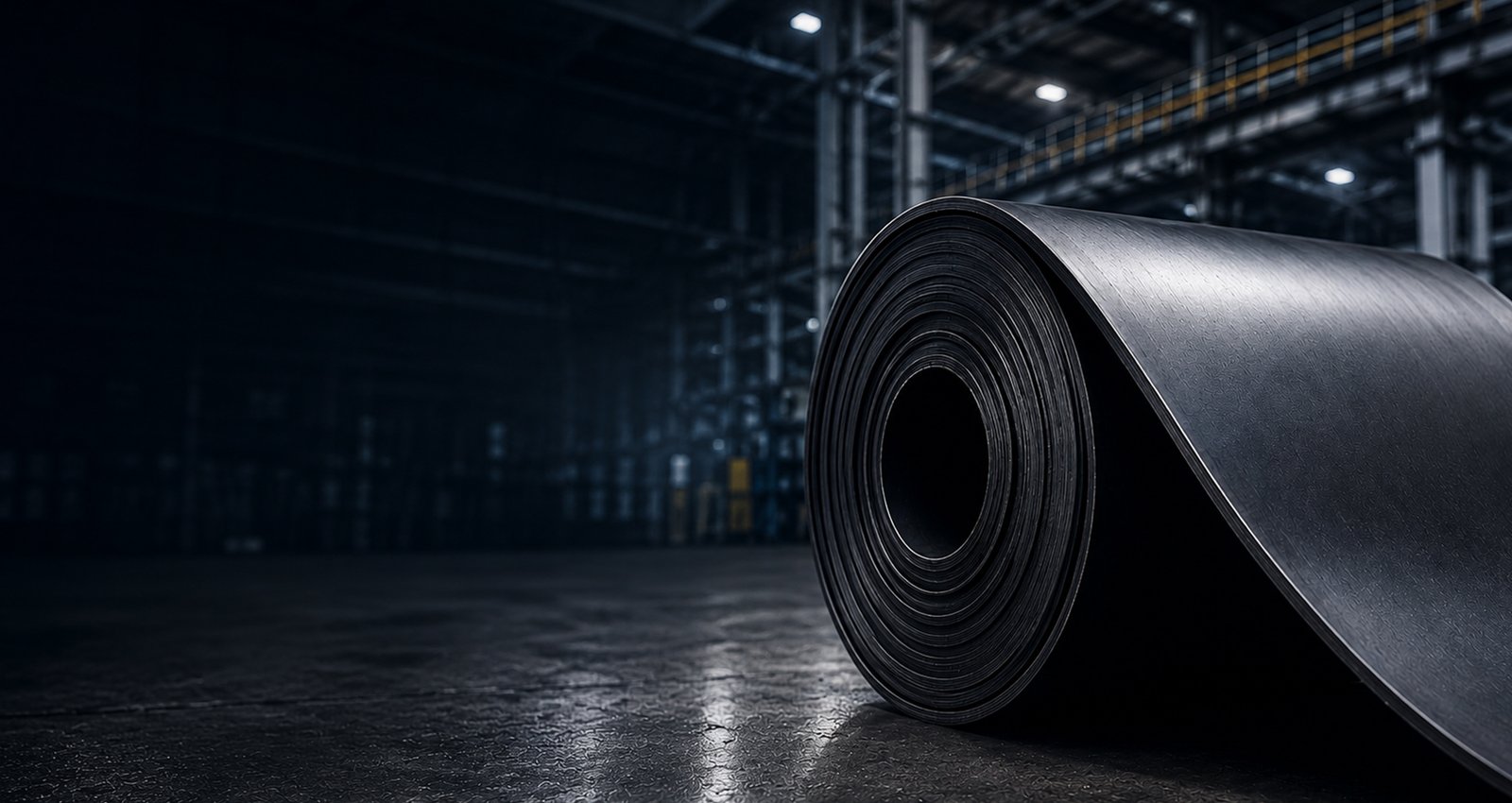
Rubber conveyor belt overview
Built for reliable bulk material handling.
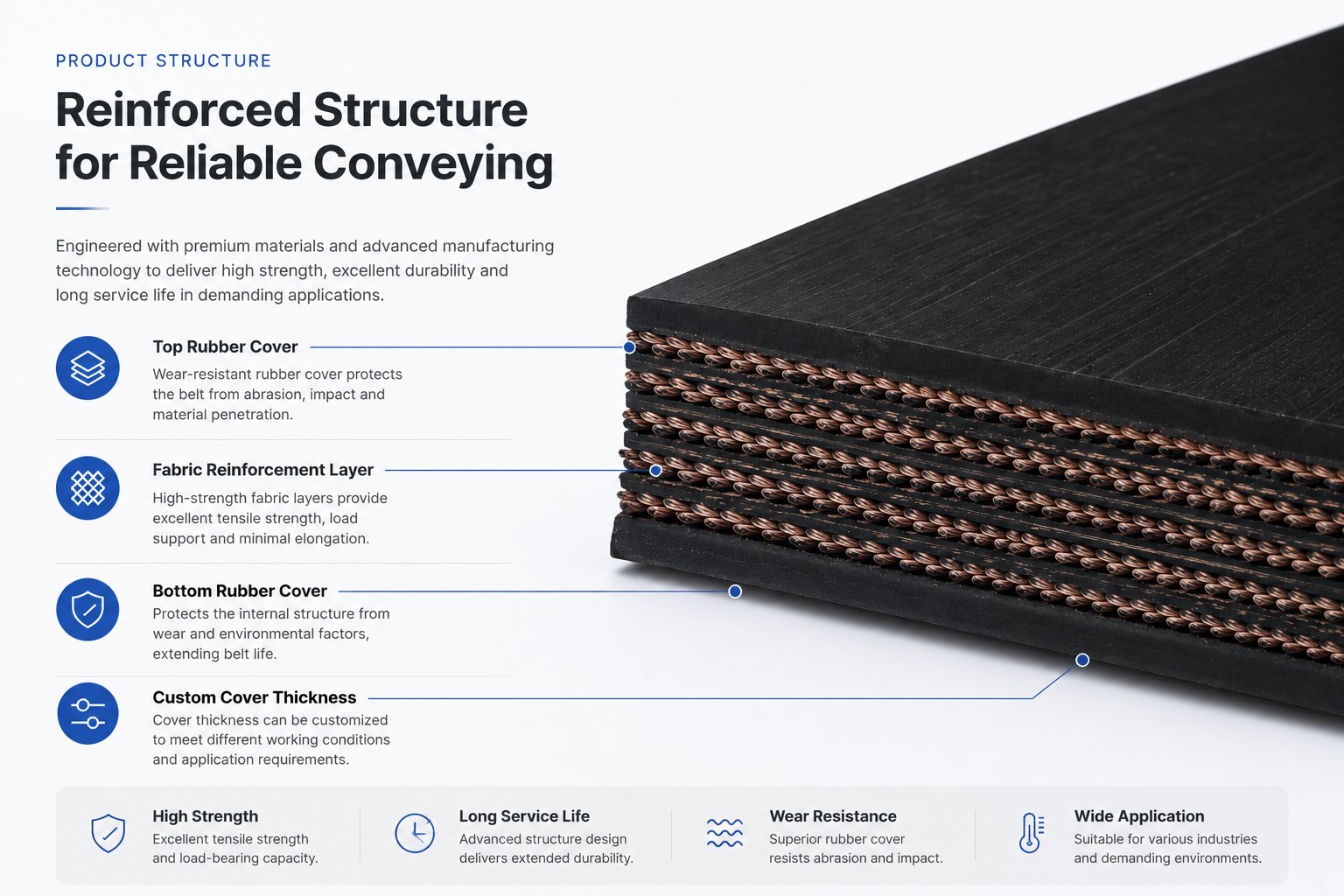
Rubber conveyor belts combine a reinforced fabric carcass with protective rubber covers for dependable conveying in mining, quarrying, cement production and general bulk handling.
The belt construction can be selected around the conveyed material, operating tension, pulley arrangement, loading conditions and working environment. This helps match the carcass, tensile rating, cover thickness and cover grade to the actual duty.
Performance priorities
Why this belt family works.
Each specification should be selected against the duty rather than treated as a one-size-fits-all product.
Wear resistance
Rubber cover compounds help protect the carcass when handling abrasive bulk materials.
Stable operation
Balanced construction supports consistent conveying in continuous industrial service.
Configurable strength
Fabric type and tensile rating can be matched to belt width, loading and operating tension.
Service-focused design
Cover thickness, grade and splice method can be selected to support maintenance objectives.
Application environments
One belt family, multiple industrial duties.
The final construction depends on the material, capacity, conveyor geometry and operating conditions.

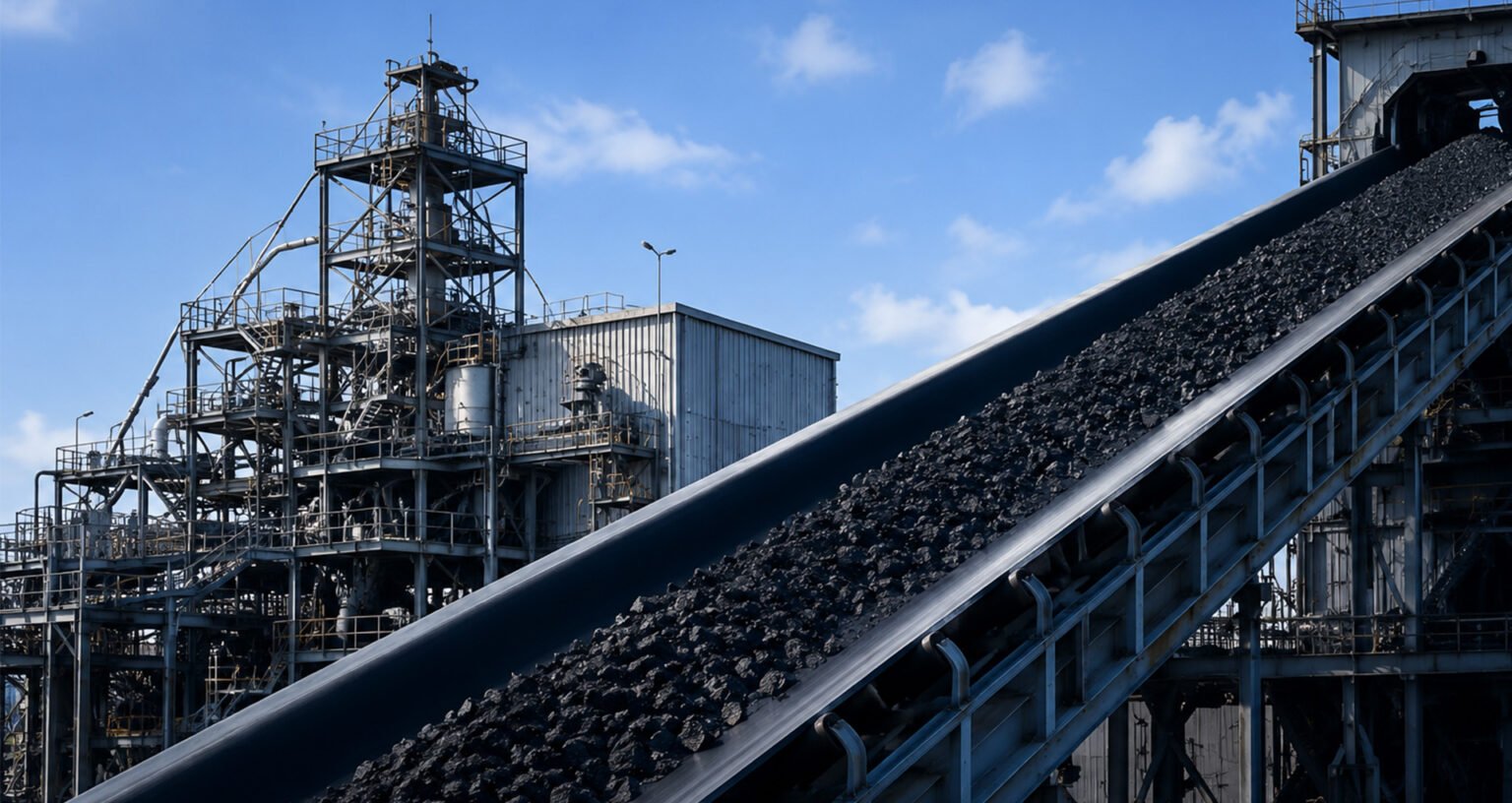
Mining
For ores, overburden and other demanding bulk material duties.

Quarry & Aggregate
For crushed stone, gravel and aggregate transfer systems.

Cement Plants
For limestone, clinker and raw-material conveying stages.

Bulk Material Handling
For terminals, processing plants, stockyards and transfer points.
Construction and selection
Construction chosen around the duty.
A useful specification starts with the operating data. The carcass and covers should work together as one system.
Technical reference
Reference specifications.
The following values describe the available product range. Final values should be confirmed against the conveyor duty and purchase specification.
| Item | Available range / reference |
|---|---|
| Belt width | 300–2400 mm |
| Fabric type | EP / NN / CC |
| Tensile strength | EP100–EP500 |
| Top cover thickness | 1.5–10 mm |
| Bottom cover thickness | 1.5–6 mm |
| Temperature range | −20°C to 80°C |
| Standard roll length | Up to 400 m |
| Splice type | Hot vulcanized / mechanical fastener |
| Typical application | Bulk material handling |
| Reference standards | ISO 14890 / DIN 22102 / AS 1332 |
Specifications are subject to technical confirmation. Share the required standard and operating data when requesting a quotation.
Selection checklist
What to send for belt selection.
Complete operating information helps reduce assumptions and makes the quotation more useful.
Material
Material name, bulk density, lump size, temperature and abrasion characteristics.
Conveyor
Belt width, center distance, capacity, speed, inclination and pulley arrangement.
Environment
Indoor or outdoor duty, ambient conditions, moisture and special cover requirements.
Supply details
Required standard, roll length, quantity, packaging and destination.
Frequently asked questions
Before requesting a quotation.
What information is needed to select a rubber conveyor belt?
Provide the conveyed material, capacity, belt width, conveyor length, speed, inclination, operating environment and any required standard. Existing belt markings or drawings are also useful.
Which fabric carcass options are available?
The reference range includes EP, NN and CC constructions. The suitable option depends on tension, flexibility, duty and customer specification.
How are cover thickness and cover grade selected?
They are selected around abrasion, impact, material temperature, oil or chemical exposure, pulley-side wear and the intended maintenance interval.
Can the belt be supplied to an international standard?
ISO 14890, DIN 22102 and AS 1332 are included in the reference range. The required standard and detailed values should be stated in the inquiry for confirmation.
Technical quotation
Share the duty. We will review the specification.
Send the operating details you already have. The team can use them to review the belt family, construction and quotation requirements.
- Material and conveying capacity
- Belt width, length, speed and inclination
- Working environment and required standard
- Quantity, roll length and destination
Request a quotation
Complete the form below and include as much operating information as possible.