

Selection starts with the duty
Choose the belt around the operating conditions—not only the product name.
Conveyor belt selection begins with the material, capacity, conveyor geometry and working environment. Belt Rubber supplies five core belt families that cover general bulk handling, long-distance high-tension systems, steep inclines and light-duty conveying. Share the operating data and our team can help narrow the carcass, tensile rating, cover grade, profile and dimensions.
Product families · 01
Five conveyor belt families for different conveying duties.
Review the typical fit for each family, then open the detailed product page for construction, options and application guidance.
 01
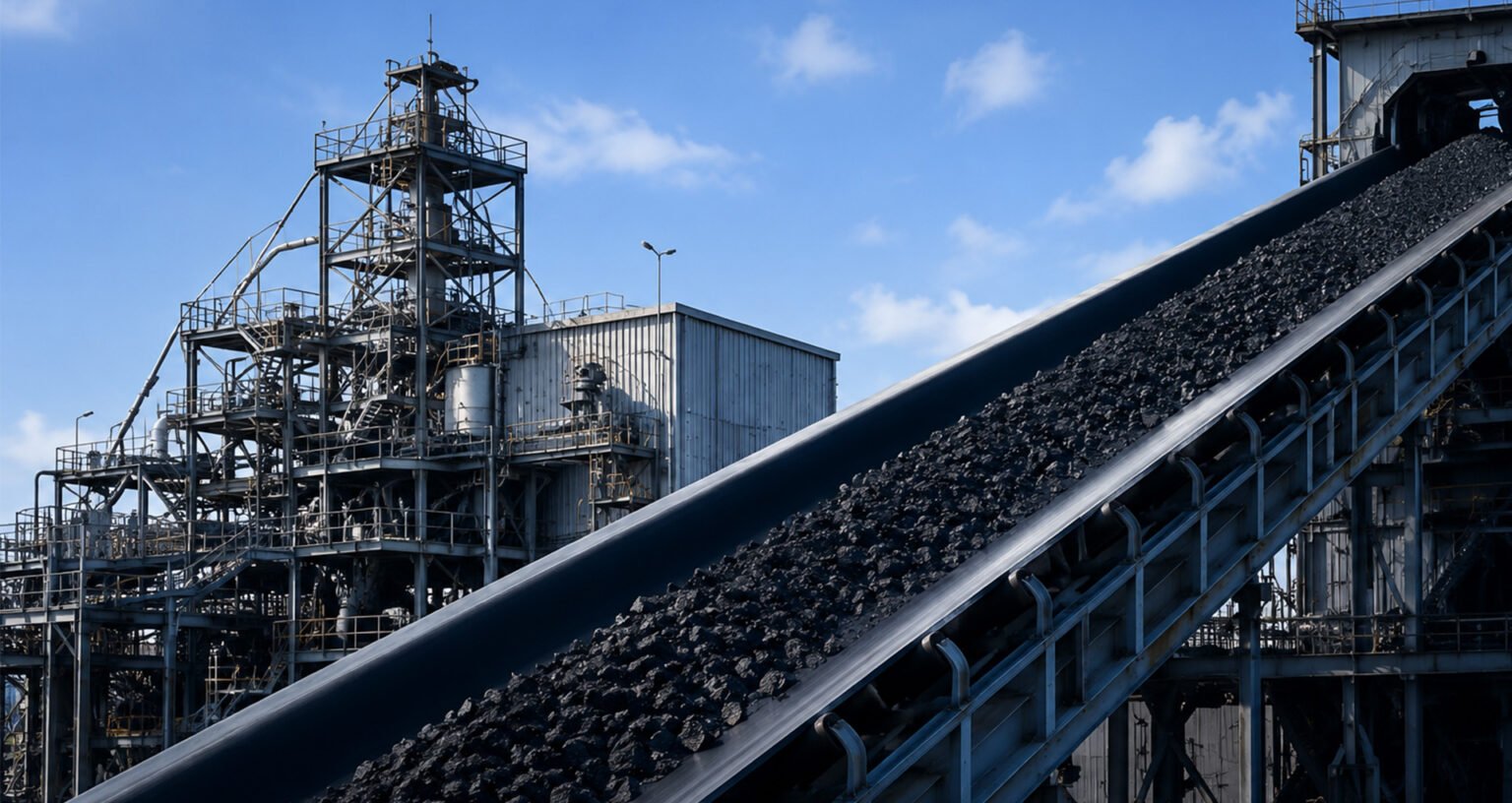
General bulk material handling
Rubber Conveyor Belt
Fabric-reinforced rubber belting for mining, quarrying, cement, ports and general industrial conveying. Construction and cover properties can be selected around abrasion, impact, temperature and other operating demands.
- EP / NN carcass
- Custom cover grades
- General bulk handling
 02
Long distance and high tension
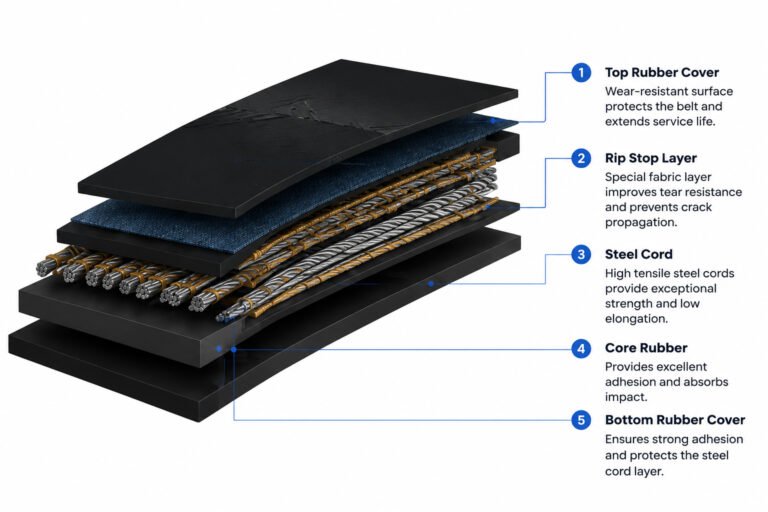
Steel Cord Conveyor Belt
High-tensile steel cord reinforcement delivers low elongation and dependable strength for long conveyors, heavy loads and demanding operating tensions.
- Low elongation
- High tensile strength
 03
Steep-angle conveying
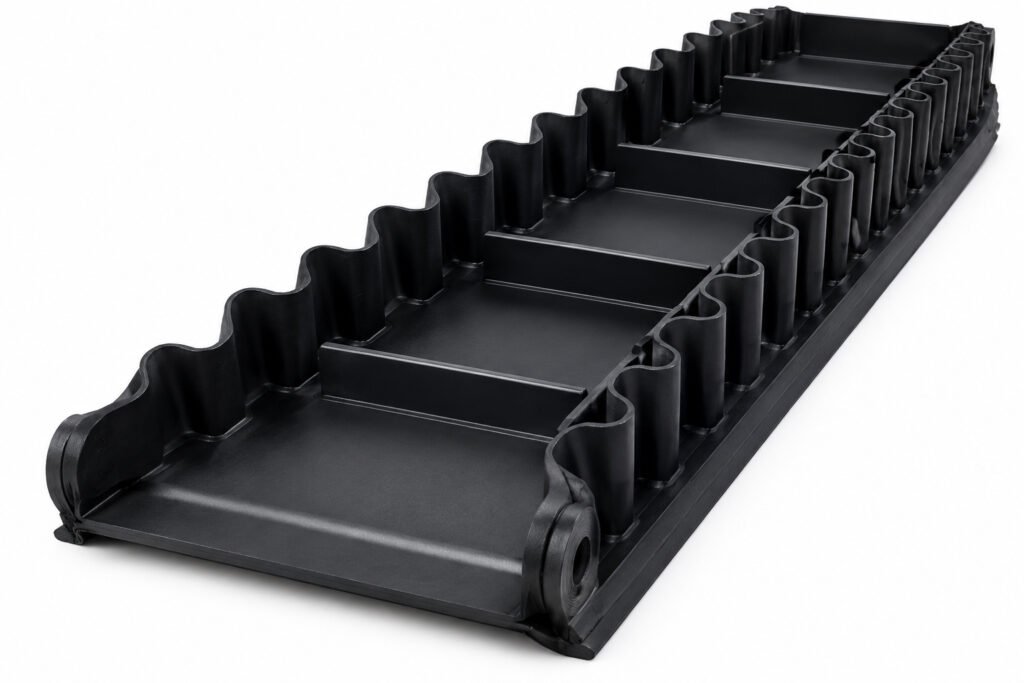
Sidewall Conveyor Belt
Corrugated sidewalls and transverse cleats help contain bulk materials on steep inclines while reducing transfer points and required floor space.
- Corrugated sidewalls
- Cleat options
 04
Grip on moderate inclines
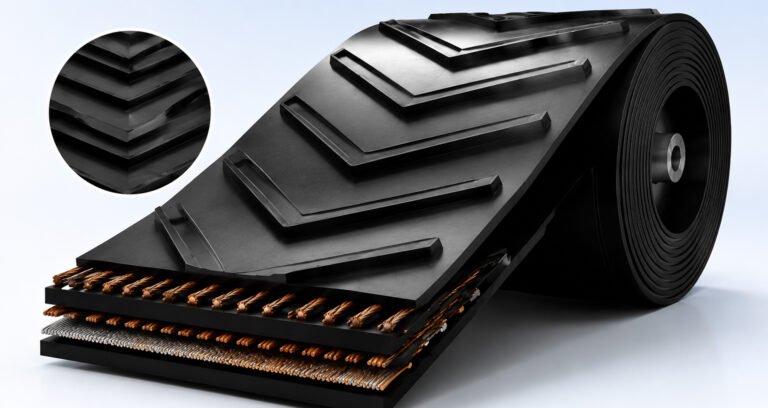
Chevron Conveyor Belt
A profiled rubber cover improves material stability, helps limit rollback and supports more reliable conveying on inclined or slippery routes.
- Profile options
- Reduced rollback
 05
Light-duty and clean conveying
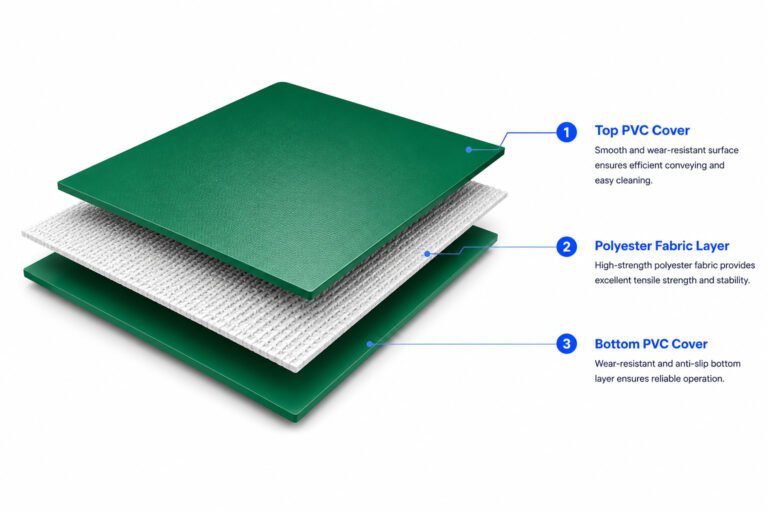
PVC Conveyor Belt
Flexible synthetic belting for packaging, logistics, airports and selected processing lines where surface finish, tracking and easy maintenance matter.
- Flexible construction
- Multiple surface finishes
Quick comparison · 02
Use the application to narrow the starting point.
This comparison supports early product selection. Final construction should be confirmed against the complete operating data.
| Belt family | Typical duty | Load / tension | Incline | Key inputs |
|---|---|---|---|---|
| Rubber conveyor belt | Mining, quarry, cement and bulk terminals | Medium to heavy | Flat to moderate | Abrasion, impact, temperature, width and cover grade |
| Steel cord conveyor belt | Long-distance and high-capacity systems | High to very high | System dependent | Operating tension, length, splice design and troughability |
| Sidewall conveyor belt | Space-limited and steep-angle bulk conveying | Application dependent | Steep | Incline angle, cleat height, sidewall height and return path |
| Chevron conveyor belt | Inclined loose material or packaged loads | Light to heavy | Moderate | Material stability, profile height, pulley diameter and cleaning |
| PVC conveyor belt | Packaging, logistics and selected processing lines | Light to medium | Low to moderate | Surface finish, hygiene, pulley diameter, tracking and speed |
Not sure which family fits? Send the material, belt width, conveyor length, incline, capacity, speed and operating environment for a more useful recommendation.
Specification workflow · 03
Move from application data to a production-ready belt specification.
The product family is only the first decision. A reliable quotation should also confirm construction, dimensions, standards and delivery requirements.
Define the duty
Material, lump size, capacity, conveyor length, incline, speed and operating environment.
Select the construction
Carcass or cord strength, belt width, cover grade, profile, cleats and other configurable details.
Confirm requirements
Applicable standards, tolerances, splice approach, marking, inspection and required documents.
Prepare the quotation
Quantity, roll length, packaging, destination and target schedule aligned before order confirmation.
Discuss your conveyor · 04
Send the operating data. We will help define the next specification step.
For a practical response, include the material, capacity, belt width, conveyor length, incline, speed, temperature and any required standard. Drawings or an existing belt specification can follow by email.